
Arrest Warrants in Otsego County
An Otsego County arrest warrant is a judge's or magistrate's order to take someone into custody on a criminal accusation. It does not issue on a hunch. A complaint plus a sworn affidavit must show probable cause that an offense occurred and that the accused took part. The 87-A District Court jurisdiction page confirms the court issues both search and arrest warrants. County pages also describe magistrates handling the same duty on call. The warrant's job is narrow. It authorizes the arrest so the person can be brought before a magistrate. Everything after that, including the charge, the bond, and the case schedule, happens in court.
Note: An Otsego County arrest warrant can be executed at any police contact, which is why timing matters once one is open.
The Otsego County Arrest Warrant Complaint
An Otsego County arrest warrant usually begins with a police report, not with a judge. The officer writes it up. The county prosecutor then reviews the file and decides whether to authorize charges. From there the paperwork reaches a magistrate or judge, who weighs probable cause. If the person is not already in custody, that decision turns an investigation into a court case. If the person is in custody, the county's historic process description calls for charge review within 24 hours. The county General Information page lays out the magistrate's role in this process.
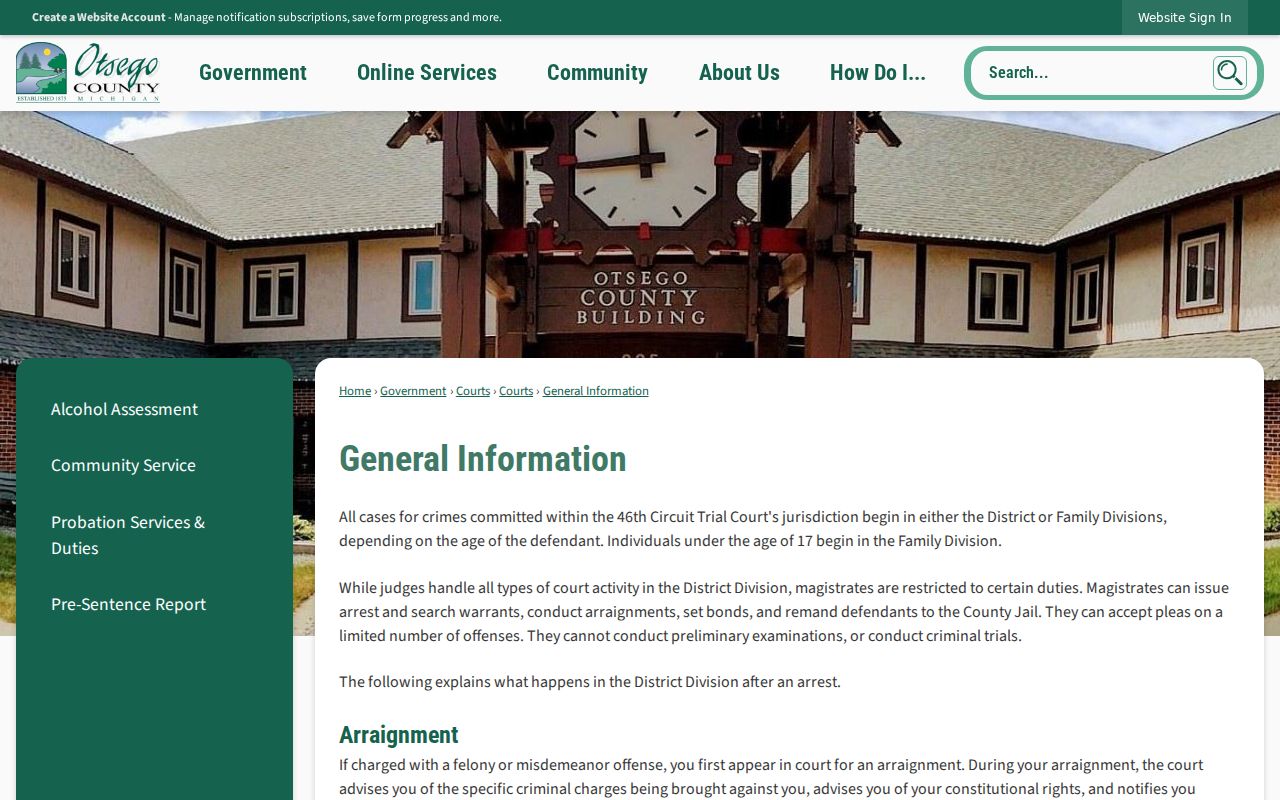
A magistrate in Otsego County can issue arrest and search warrants, set bond, and remand a defendant to the jail. Running a trial, though, is outside that office's power.
What an Otsego County Arrest Warrant Contains
Michigan law fixes the core contents of a warrant. It must recite the substance of the accusation, direct a peace officer, command the arrest, and send the person before a magistrate. Otsego County files add case detail around that required core.
| Case Identifier | The court's own case or citation number, for example 2026-1234-CR. |
|---|---|
| Accusation | The substance of the offense the warrant recites. |
| Issuing Officer | The magistrate or judge who signed the order. |
| Command | Direction to a peace officer to arrest and bring the person before a magistrate. |
| Return | The officer's later report that the warrant was executed. |
| Bond or Release Terms | Set at arraignment when release is available. |
The instrument is a command, not a summary of the evidence behind it.
Felony Otsego County Arrest Warrants and Circuit Court
A felony case in Otsego County starts in the District Court at the Alpine Center and can end in the 46th Circuit Court at the Downtown County Building. The district judge handles arraignment and the preliminary examination. If the case is bound over, the felony file moves to circuit, and the County Clerk keeps it from that point on. Misdemeanor cases stay put in the District Court. The split matters. Whoever holds the file depends entirely on the charge.
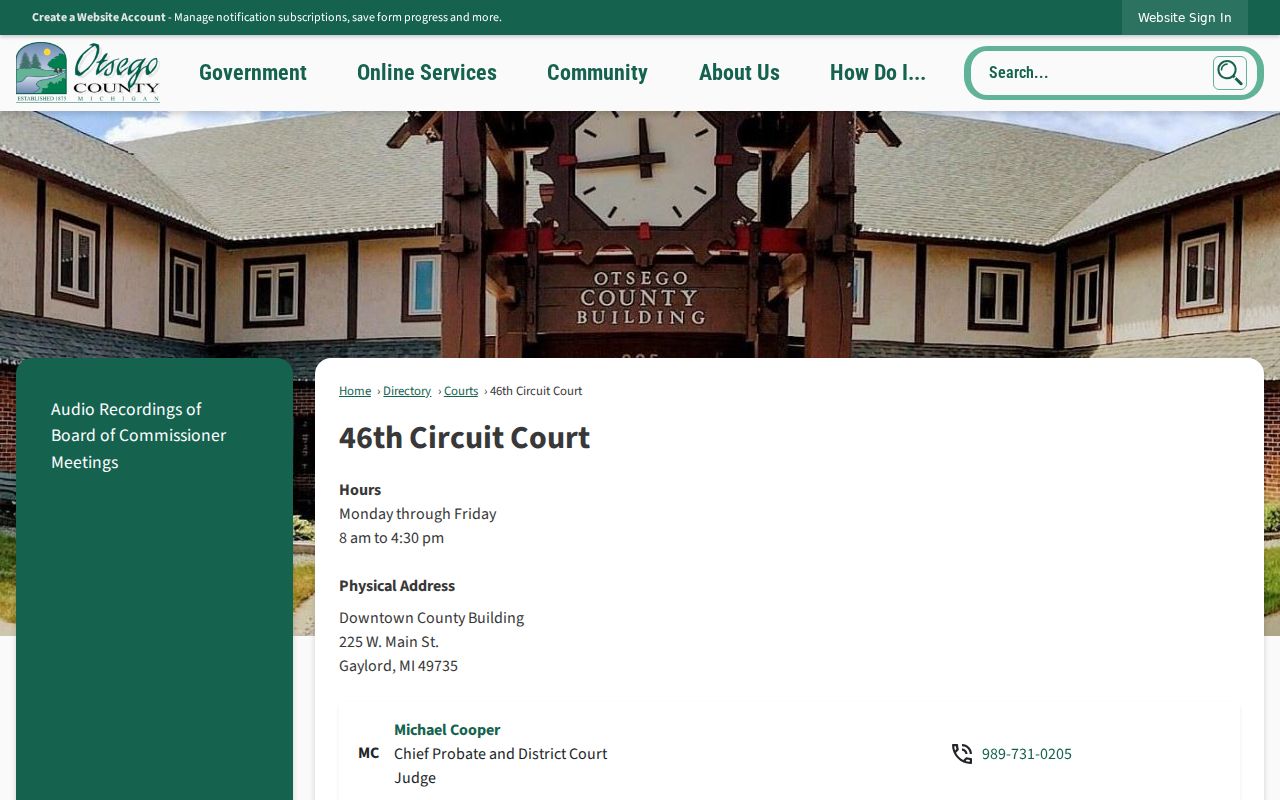
The 46th Circuit Court directory lists the circuit clerk along with felony, family, and juvenile contacts for Otsego County cases after bindover.
How Otsego County Arrest Warrants Are Served
Serving a warrant means making the arrest. Any peace officer who runs into it can execute it, and the issuing court sends no deputy of its own. In Otsego County, the Sheriff's Office holds countywide authority and runs the jail. Gaylord Police work inside the city limits. The Michigan State Police post covers the I-75 corridor and state matters. A jail roster, meanwhile, only shows who was in custody on a given date. It will not tell you which warrant put someone there, and it says nothing about Otsego County arrest warrants still open. Keep custody records and court status separate in your mind.
The Otsego County Arraignment on an Arrest Warrant
After an arrest on an Otsego County warrant comes the arraignment. The court states the charge, reviews the right to counsel, and decides whether release is available and on what terms. A judge or magistrate presides, as the county arraignment page explains. That page also describes felony arraignment as normally following the day after arrest. For the preliminary examination, it gives 21 calendar days, while another county page states 14 calendar days. The two disagree. Confirm your actual date with the court instead of trusting a general rule.
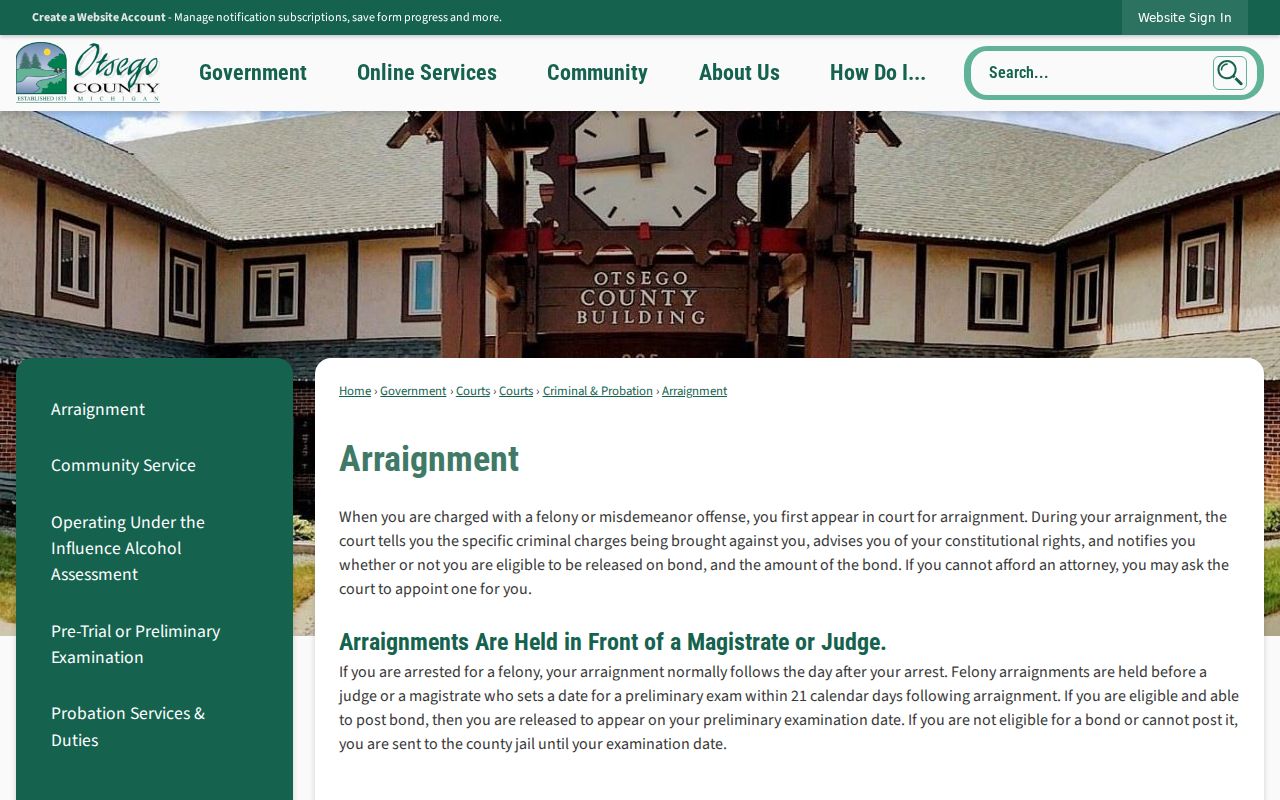
That same Otsego County arraignment page covers bond eligibility, the amount set, and how to request appointed counsel at the first appearance.
Otsego County Arrest, Summons, and Bench Warrants
Three different instruments can start or continue a criminal case in Otsego County. People mix them up constantly. What each one is for sets them apart.
| Feature | Arrest Warrant | Summons | Bench Warrant |
|---|---|---|---|
| When It Is Used | Probable-cause accusation | First appearance without custody | Missed obligation in an open case |
| Who Issues It | Judge or magistrate | Judge or magistrate | The judge in the pending case |
| Custody | Authorizes an arrest | No custody | Authorizes an arrest |
| Typical Next Step | Arraignment | A scheduled court date | Recall or an appearance |
The summons is the quiet option. Where a court finds probable cause, it can order a person to appear on a set date rather than issue a warrant, and the case proceeds from there. A missed hearing is a different problem. That belongs with Otsego County bench warrants, not a summons or a new accusation.
Bond Is Not Case Resolution in Otsego County
Bond is the step people misunderstand most in Otsego County. Paying it buys a release under conditions and secures future appearances. It does not dismiss the charge or end the case. The court sets the amount and type at arraignment, and the county publishes no general bond schedule. Court payments run on a separate track entirely. Money paid toward a fine, a ticket, or court costs is not bond, and a receipt for one proves nothing about the other. Inmate bond payments go through the Sheriff's Office. Court payments, by contrast, go to the clerk.
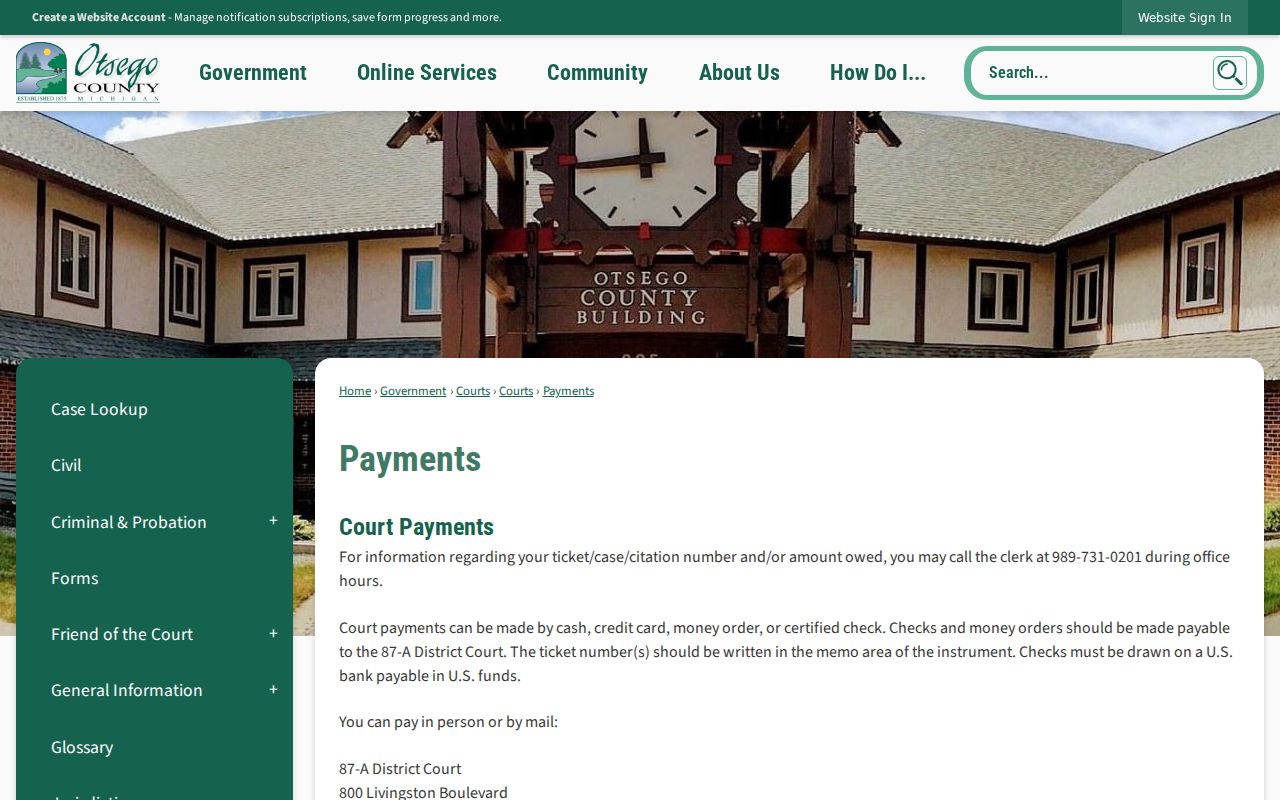
Otsego County accepts cash, cards, money orders, and certified checks for court amounts. The county payment page spells out the card convenience fees.
What to Do About an Otsego County Arrest Warrant
An arrest warrant with your name on it needs action, not a lookup. Otsego County's answer is plain: you must appear in court. How that looks depends on the charge you face.
- Talk to an attorney first. Counsel can confirm the charge, name the issuing court, and say whether a voluntary appearance fits the case.
- Call the court that issued it. Ask whether an Otsego County arrest warrant is open and what a voluntary appearance involves.
- Ask about the two-hour rule. Under the state rule on voluntary appearances, a person who presents to the issuing court within a year must be arraigned within two hours when the court is available, or the warrant must be recalled with a new date.
- Do not walk into the jail without confirming the process. Otsego County publishes bond routes but no warrant-surrender counter.
- Confirm the recall afterward. Ask the clerk for the operative status, then ask the Sheriff's Records Division how the agency record is updated.
Important: Speak with a lawyer before turning yourself in, because an open arrest warrant can turn a routine traffic stop into an arrest.
The Otsego County Prosecutor Before a Warrant Issues
Before most arrest warrants in Otsego County issue, the prosecutor reviews and authorizes the charges. The office then represents the People in District, Circuit, and Family Court. So it stands upstream of the warrant, not at the counter where people ask about one. Where is it? The prosecutor's public page covers charging, review, and court representation. It posts no warrant list, and it does not invite status requests. Send those to the issuing court.
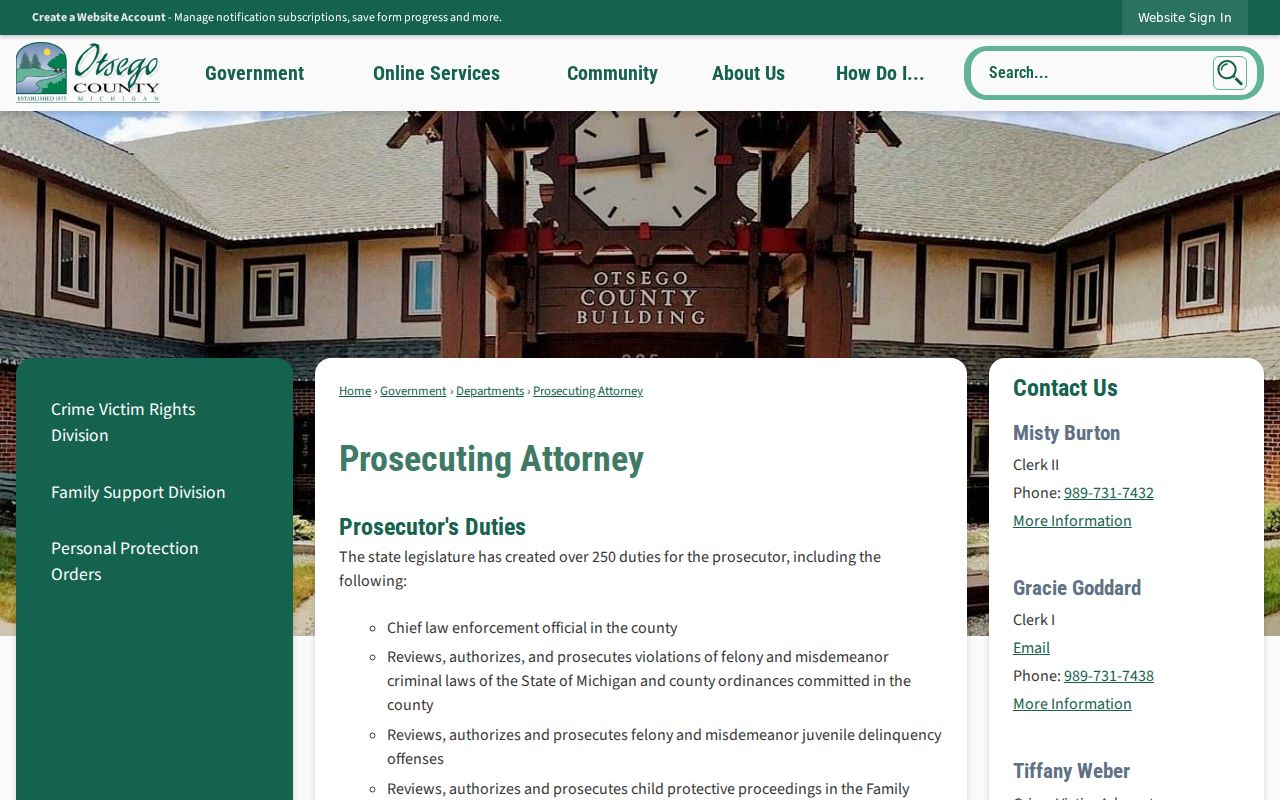
The Otsego County Prosecutor's Office works out of 800 Livingston Boulevard in Gaylord. It shares that building complex with the District Court that issues the warrant.
Federal and Out-of-State Warrants in Otsego County
Federal warrants follow a different track in Otsego County. The county belongs to the Eastern District of Michigan, where a federal complaint or indictment produces the arrest warrant. Federal agencies and the U.S. Marshals Service serve it. No state or county clerk clears it. The same logic governs warrants from other states: the jurisdiction that issued the warrant alone controls confirmation, recall, and any return process, so start with that issuing court or with an attorney who practices there.
Otsego County Arrest Warrant Terms in Plain Words
Every word on an Otsego County arrest warrant carries weight. A handful of them do most of the work.
- Probable cause
- Facts that support a reasonable belief an offense happened and that a person was involved.
- Complaint
- The charging document that states the substance of the accusation.
- Affidavit
- A sworn statement of facts that supports the complaint.
- Magistrate
- A judicial officer who can issue warrants, take arraignments, and set bond.
- Return
- The officer's written report back to the court after the warrant is executed.
- Arraignment
- The first hearing where the charge, rights, and release terms are addressed.